1. Don’t rush to the answer — arrive first
When someone is in pain, our instinct is to reach for a solution, because solutions make us feel less helpless. But the person in front of you usually isn’t looking for a strategy. They’re looking for someone who isn’t afraid of what they’re feeling.
“I’m here” is not a small thing to say. Sometimes it’s the entire job.
2. Be specific, not open-ended
“Let me know if you need anything” is well-meant, but it hands the work back to the person who is struggling — they now have to identify a need, ask for it, and manage your feelings about it. That’s a lot to ask of someone who is barely getting through the day.
Instead, offer something concrete that requires no decision from them:
| Instead of… | Try… |
|---|---|
| “Let me know if you need anything.” | “I’m bringing coffee Saturday morning. Ten okay?” |
| “I’m here whenever.” | “I’m going to text you every Wednesday. You don’t have to reply.” |
| “Want me to come over?” | “I’m coming over at 6 with dinner. Don’t clean up.” |
Specific offers remove the burden of asking. That’s the gift.
3. Let the silence be there
We tend to read silence as a failure — a gap that needs filling. But in grief, silence is often where the actual thing is happening. When you sit quietly next to someone, you’re communicating something no sentence can:
“I’m not going anywhere. You don’t have to perform for me. You don’t have to be okay on my schedule.”
What not to say — and what to say instead
| Skip this | Say this instead |
|---|---|
| “Everything happens for a reason.” | “This is really hard. I’m sorry.” |
| “At least…” / “Look on the bright side.” | “That sounds exhausting.” |
| “You’ll get through this. You’re strong.” | “You don’t have to be strong right now.” |
| “Have you tried ___?” | “Do you want company, or space?” |
| “They’re in a better place.” | “I’m here. Tell me about them, if you want.” |
Notice the pattern: the second column doesn’t explain the pain or move it along. It simply makes room for it.
When you want to give something
Sometimes presence needs a physical form — especially when you can’t be there in person. If you’re looking for something to give, choose objects that accompany rather than objects that fix:
- A card with honest words. Not a Hallmark sentiment — a real sentence. “I don’t know what to say, but I’m thinking about you every day” is worth more than any polished condolence.
- Something for the body. Grief is physically exhausting, and it nearly always wrecks sleep. Something weighted and soft — an eye mask, a blanket — helps in ways words can’t.
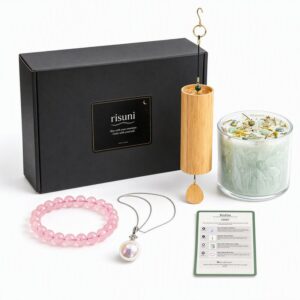
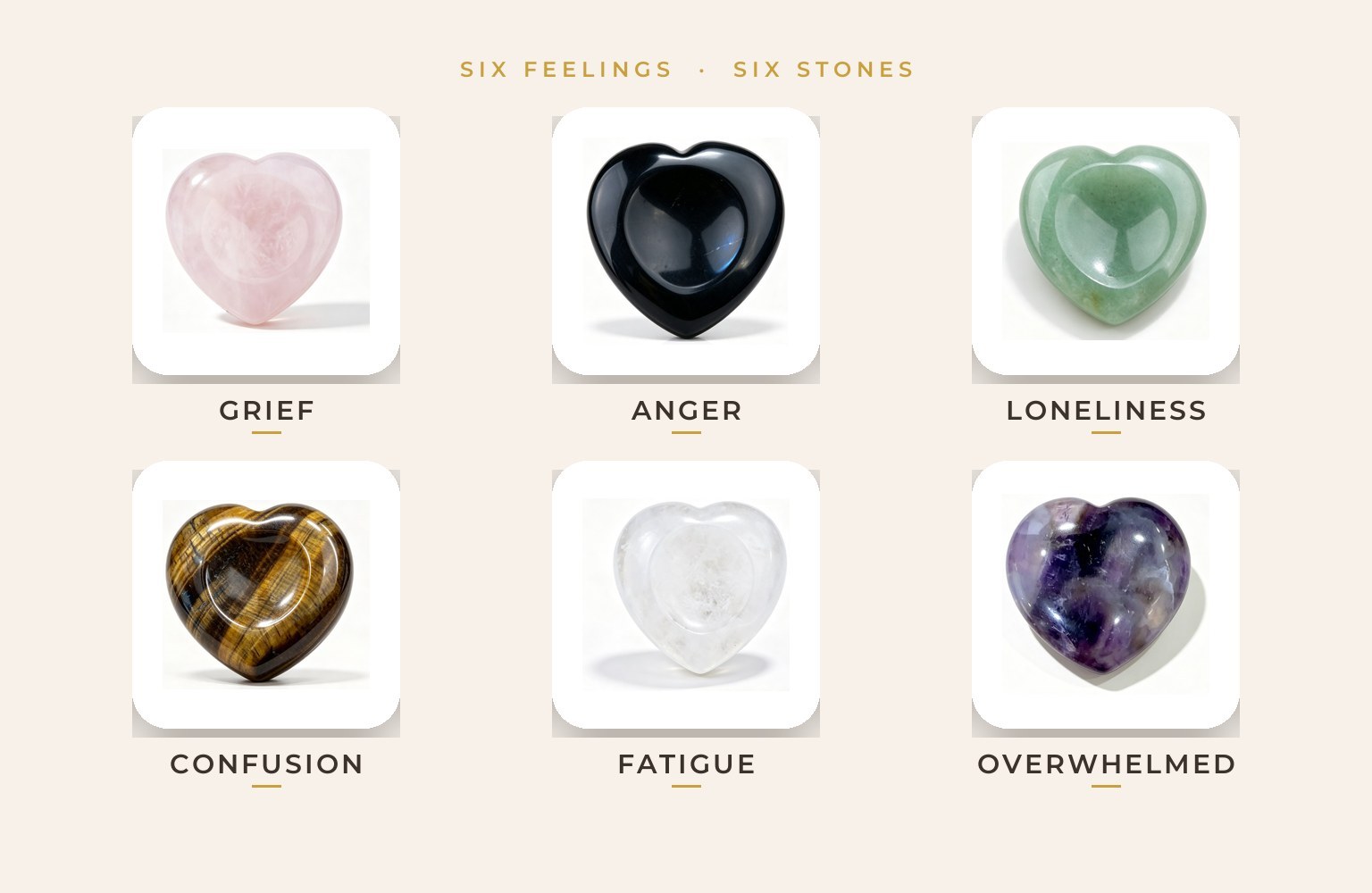
- Something to hold. When words run out, small objects can carry care — a smooth stone from a beach you both know, a mug that fits their hands, something soft to keep beside the bed. Gifts like these don’t try to fix anything, and that’s exactly why they help.
You don’t have to get it right
Here’s the part nobody tells you: you will not say the perfect thing. There isn’t one. You’ll say something awkward. You’ll occasionally get it wrong.
What people remember years later isn’t the sentence. It’s that you stayed. That you kept showing up after the casseroles stopped. That you weren’t frightened by their sadness.
You don’t have to be good at this. You just have to be there.
And if you’ve been the one doing the holding — you deserve somewhere to put your own weight down too. Write what you’re carrying in the Emotional Tree Hole — someone will read it, and no one will rush you.