The first year has three dates nobody warns you about.
Card shops do not have a shelf for this.
You are standing in one on a Thursday evening, holding a card with With Sympathy in gold script, and the person you are buying for is fifty-three. She has a mortgage, a teenager, and a job that expects her back on Monday. Her father died on Tuesday. Nothing on that shelf was designed for a fifty-three year old who just lost a parent.
The cards assume you are writing to someone young, or that the loss is fresh and raw. The first year does not work like that. It moves in waves, and the waves land on dates you cannot plan for.
Who you are actually buying for
Most people losing a parent in the US and UK are in their forties, fifties and sixties. That matters, because the support around them is designed for someone much younger.
Nobody brings casseroles to a fifty-three year old. Friends assume she is handling it, because she is competent and has handled everything else. Colleagues send a card and then stop. Her own children need her to be okay.
So the person you are buying for is not a child who needs comforting. It is an adult holding several other people up, with nowhere to put any of it.
The three dates nobody warns you about
The funeral is busy. The week after is busy. Then everyone leaves, and the calendar goes quiet until it does not.
The birthday. Not hers. His, in about five months.
The anniversary. The date he died, which will arrive whether she is ready or not.
Mother's Day, or Father's Day. This is the one that ambushes people. The shop windows change colour three weeks early. Every email subject line is about it. And there is no version of that Sunday that fits her anymore.
All three are hard. Almost all three come with no support, because by then the event that gathered everyone has ended.
What helps: something that stays
The test I use is simple. Will this still be in her house in six months?
Things that pass tend to be small and unremarkable, which is the point. They do not announce themselves as grief objects. She can put one in a pocket or on a windowsill and nobody asks about it.
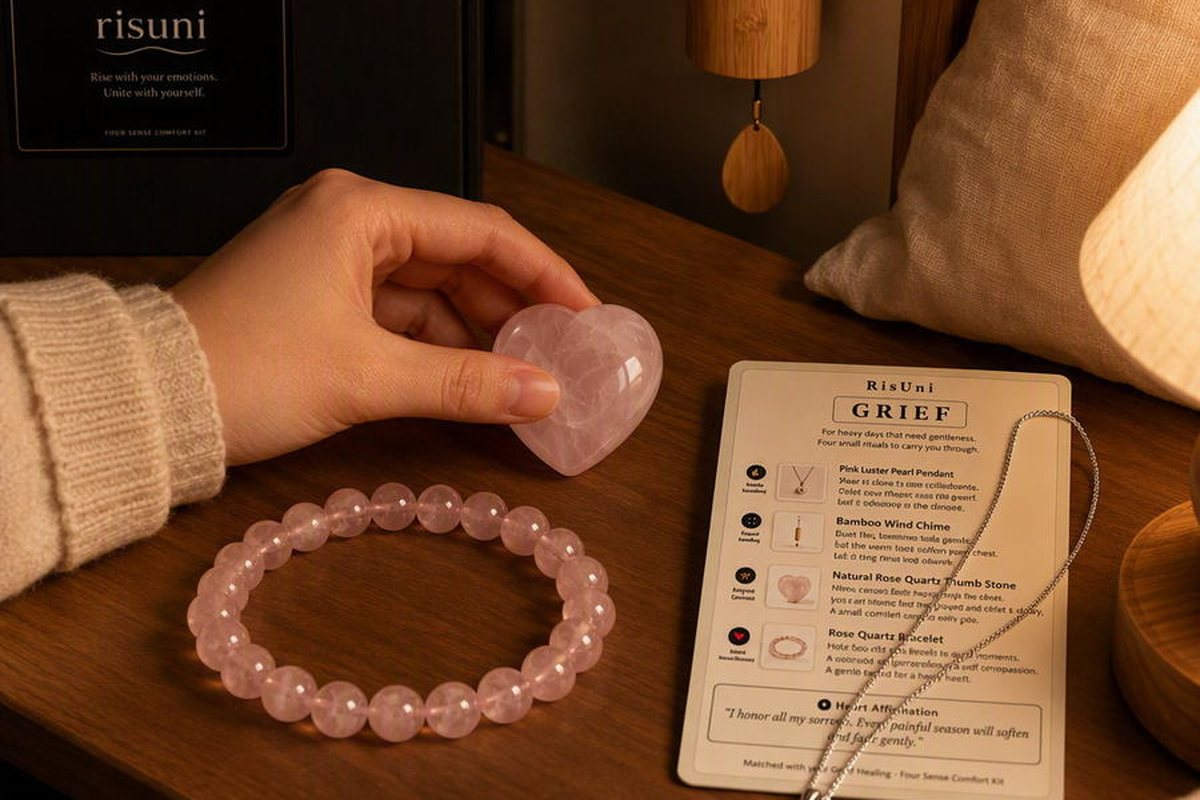
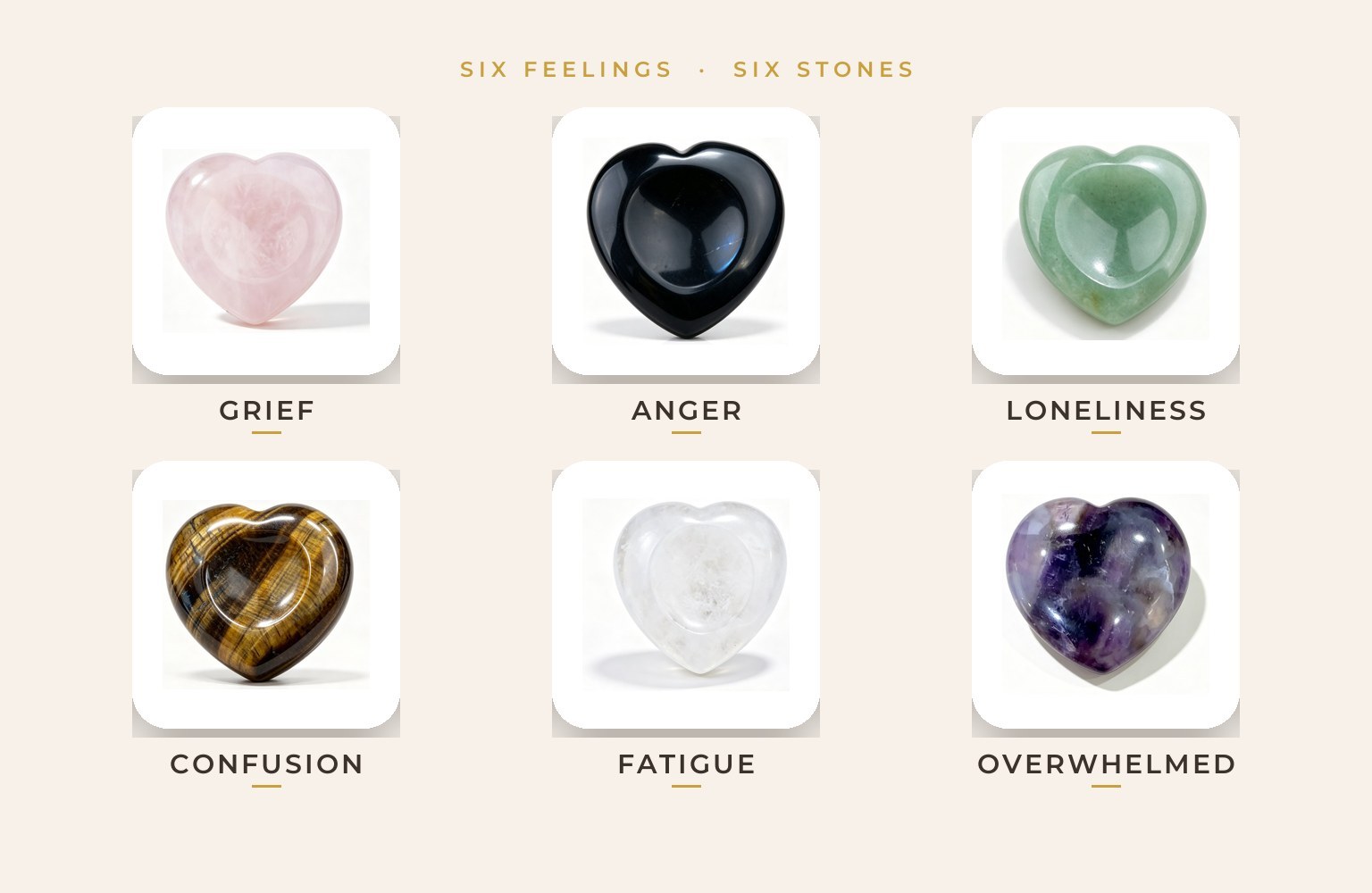
A thumb stone. Ours is 40mm across and 8mm thick, with a groove cut for the thumb. It sounds like nothing. It is the object most people keep in a pocket for years.
Something she can wear. A bracelet or a pendant goes on in the morning and stays. It requires no decision, which is exactly what someone in month three has no capacity for.
Something that makes a noise. A house after a death is often too quiet. A small bamboo wind chime tuned to C, E and A gives the room a sound that is not her own voice.
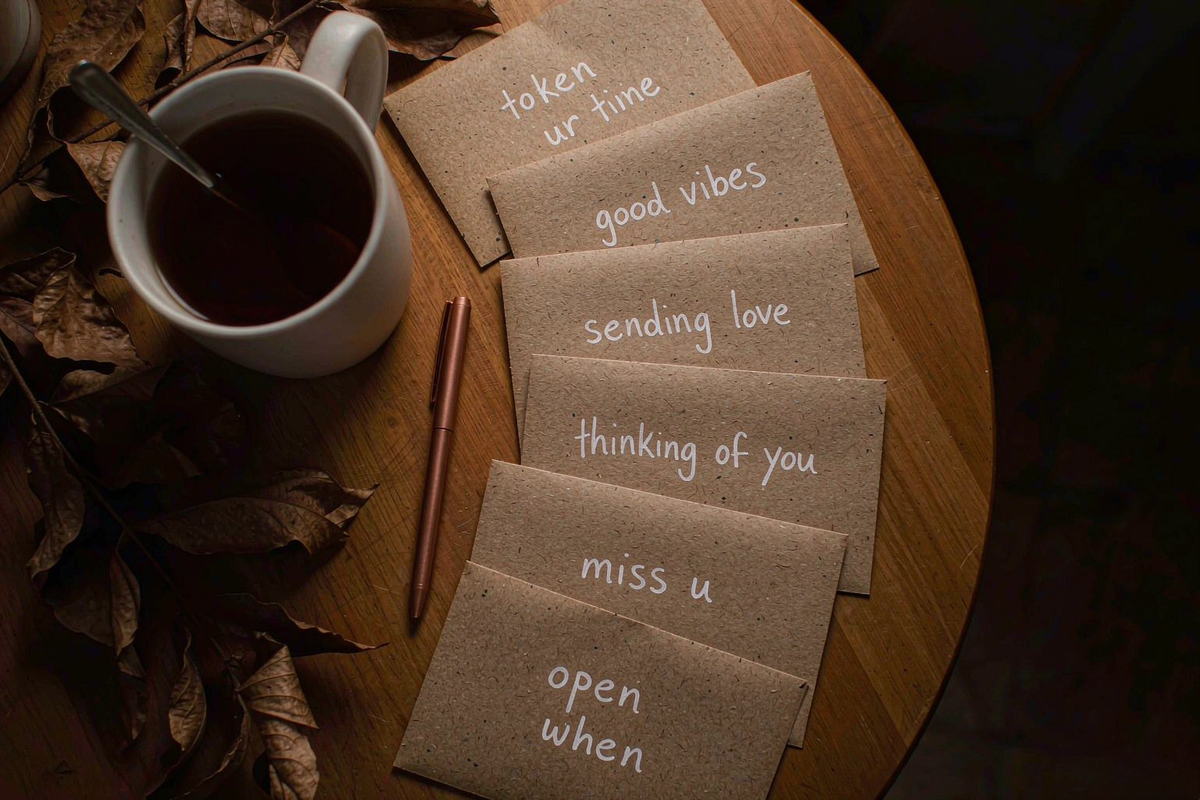
A card with specific words. Cheap, and the thing she will reread.
What helps: something that does something
Objects are not the only answer, and for some people they are the wrong one.
Take a task off her. The school run for a week. The dog for a weekend. The thank you letters, which nobody wants to write and everyone feels obliged to. Offer a specific task, because general offers get politely declined.
Show up with food that is not a casserole. Something that freezes, in portions, with instructions written on the lid. A dish made for twelve is useless to a household of two.
Remember the date so she does not have to organise it. A text on the anniversary saying you remembered costs nothing and lands harder than the first gift did.
What to skip
Picture frames. Everyone thinks of this and it is almost always a mistake, because the frame arrives empty and now she has to find a photograph and print it. You have turned a gift into homework.
Candles and scented things. They burn down, and scent is a preference you cannot guess at.
Anything that explains the death. No book about the stages. No print of the poem about the tide. She is not behind schedule and does not need a map.
Cards with the word closure on them. There is no closure. There is a person who slowly gets better at carrying it, and the word mostly tells her she is doing it wrong.
The card
Three rules, and the third matters most.
Do not say he is in a better place. You may believe it. She may believe it. It still lands as an argument when she was not asking for one.
Do not say at least he lived a long life. It is the most common sentence people write and the one most likely to land badly. It tells her the loss should be smaller than it feels.
Write one thing you remember about him. A specific afternoon. How he answered the phone. The fact that he always arrived early and then complained about the traffic he had created for himself.
Specific beats sincere. Every time. Because specific proves you were paying attention, and paying attention is the only thing anyone actually wants in that first year.
If you knew the parent too
Many people buying these gifts are grieving the same person, and that is a hard position to be in.
Your loss is real. Say it once, then hand the centre of the room back to her. Something like, I miss him too, and I cannot imagine what this is like for you, works. Something like, I know exactly how you feel does not, even when it is true.
The offer that helps is concrete. Not let me know if you need anything, which puts the work back on her. Instead, I am free Saturday morning, I will bring coffee, and we do not have to talk.
If she has siblings
One practical thing that gets missed. If your friend has brothers or sisters, do not send only to her, and do not assume they are sharing the load.
Siblings often divide the admin and none of the feelings. One handles the funeral, one handles the bank, one handles the house. On paper it looks organised. In practice each of them is grieving alone, and each of them believes the others are coping better.
There is also a quiet unfairness in most families. The sibling who lived closest carries the most work and receives the least sympathy, because everyone assumes they were prepared for it. They were not.
If you know the family, send separately. Two cards, two small things. It costs a little more and it prevents a resentment that can outlast the year.
What it costs
Around $12 to $25, one object and a card. A single thumb stone is $11.99 at our shop, and 40mm of polished stone is not a token. Small is not the same as cheap.
$40 to $80, a piece of jewellery and a card, or two things that work together.
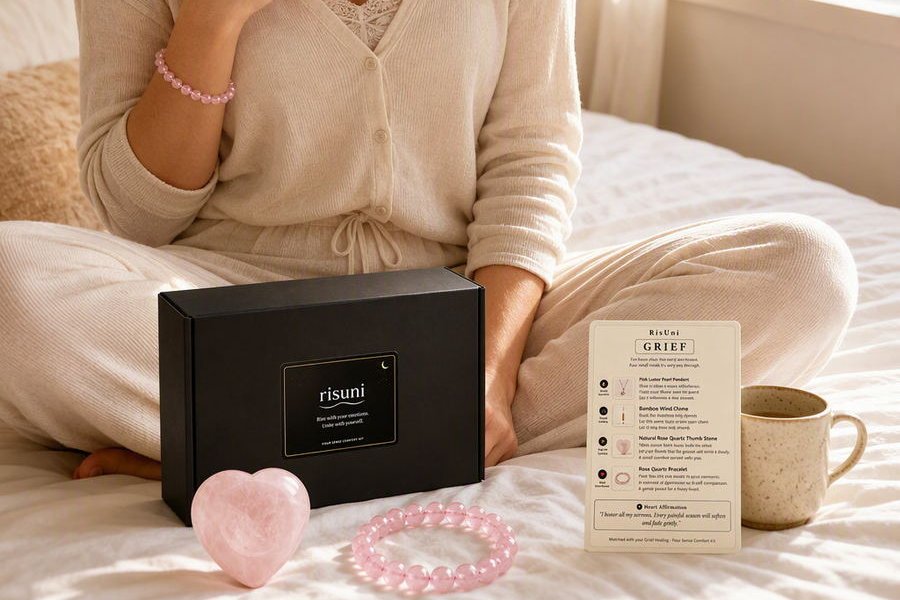
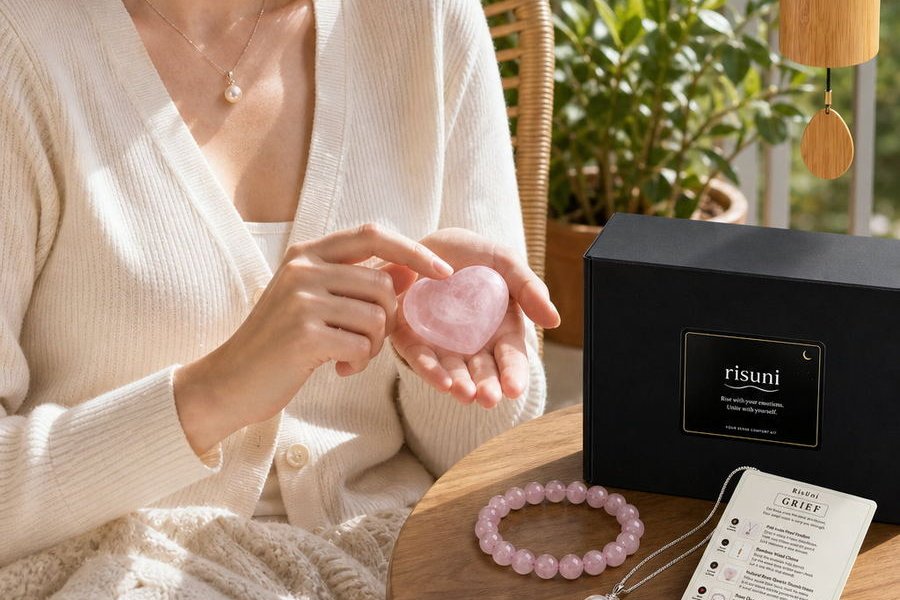
Above $100, people buy a box. Our four piece grief kit is $148.50. A pearl pendant on a 925 silver chain, a bamboo wind chime tuned to C, E and A, a rose quartz bracelet, a rose quartz thumb stone, and a printed card. Packed by hand, no receipt inside, free shipping with no minimum.
None of these are required. The cheapest useful thing on this list is a message on the right date, and that costs nothing at all.
One thing to do today
Open your phone. Put three reminders in. His birthday, the date he died, and Father's Day.
That is the whole gift. The object is optional. The reminder is not.
Not sure what to send this week?